Projects Completed Fall 2025
These five projects have been completed by students who will graduate December 2025.
Student Team: Jaden Carman, Zachry Dicarlo, Joe Di Fiore , Luke Gaggley, and Ari Vara
Project Partners: Arcadis and Tennessee Department of Transportation (TDOT)
Summary: Site hydrology was analyzed based on existing as well as proposed conditions, and a bridge replacement was designed on Buffalo Valley Road which informed a project cost. The existing watershed was modeled in accordance with the FEMA Floodplain Management Guidelines, and a new TDOT-compliant culvert was specified based on the design storm stipulated by the TDOT Drainage Manual. The existing roadway elevation for Buffalo Valley Road was assessed to accommodate the proposed hydraulic structure, and a new roadway cross section was designed in accordance with the American Association of State Highway and Transportation Officials (AASHTO) Policy on Geometric Design of Highways and Streets (Green Book) and TDOT design standards. The structural capacity of the proposed culvert was determined based on the TDOT standard and compared to the internal forces for the structural elements which were calculated in compliance with loads defined by the AASHTO Load and Resistance Factor Design (LRFD) Reference Manual. Geotechnical design parameters were calculated using the USDA Soil Collection Database, and reinforced concrete walls for the selected TDOT culvert were validated in accordance with ACI-318 based on the soil conditions at Buffalo Valley Road. Traffic control plans were developed in accordance with MUTCD standards, and the cost of the project was estimated using TDOT Unit Prices.

Student Team: Ethan Dodds, Nathan Welden, Silas Jarrett, Jerrin Lowe, and Katie Hilner
Project Partners: Gresham Smith Engineering and Knox County
Summary: An enhanced roadway was designed for Hardin Valley Road, incorporating drainage features and new grades, which influenced the development of a construction plan. A Tennessee Department of Transportation (TDOT) compliant roadway was designed between Solway Road and Award Winning Way, following the American Association of Safety and Highway Transportation Officials (AASHTO) Green Book. Traffic timing was determined at Valley Vista Road in compliance with the Federal Highway Administration (FHWA) Traffic Signal Timing Manual, informed by the estimated 10-year traffic growth, and a signal was specified according to the Manual on Uniform Traffic Control Devices (MUTCD). A stormwater conveyance system, discharging to Connor Creek, was designed in accordance with the TDOT Drainage Manual. Concrete retaining walls were designed based on proposed grades along Hardin Valley Road and a standard TDOT culvert extension was analyzed, both in compliance with American Concrete Institute (ACI) 318-19. A project schedule was developed based on material quantity take-offs, and a construction cost was estimated according to TDOT’s standard unit prices.

Student Team: Laci Sheddan, Wade Savage, Jake Pleines, and Braxton Allen
Project Partners: City of McMinnville and James C. Hailey and Co.
Summary: An animal control facility and necessary utilities were designed for the city of McMinnville, which informed an engineer’s cost estimate. A new structure, comprised of concrete masonry unit (CMU) walls and a steel roofing system, was designed in compliance with the City of McMinnville Municipal Code, as well as material specific criteria. A Tennessee Department of Environment and Conservation (TDEC) compliant water distribution system was designed considerate of owner defined building functions, and a wastewater system was designed based on gravity flow. A soil sampling plan was developed based on the proposed building location, and samples were analyzed in accordance with American Society for Testing and Materials (ASTM) standards to design a building foundation. A construction logistics plan was developed in accordance with TDEC’s Tennessee Erosion and Settlement Control Handbook (Referred to herein as TDEC Handbook), and an engineer’s cost was estimated according to local vendors as well as comparable construction bid packages.

Student Team: Carson Bock, Luca Desmond, John Schneider, and Griffin Selberg
Project Partners: Knox County and City of Knoxville
Summary: A new intersection on Solway Road was developed, and an onramp to Pellissippi Parkway was designed, resulting in the design of a modified drainage system which informed construction logistics. A new intersection configuration was designed according to the Tennessee Department of Transportation (TDOT) Traffic Design Manual, and new traffic signal control measures were developed using Cubic Synchro software as well as the Manual on Uniform Traffic Control Devices (MUTCD). An on-ramp was designed to connect Solway Road to Pellissippi Parkway using OpenRoads Designer (ORD) software, and a widened roadway alignment along Solway Road was determined in compliance with the TDOT Roadway Design Guidelines. Existing hydrologic conditions were analyzed using KGIS data, and recommended drainage system upgrades for existing and new features were determined in accordance with the TDOT Drainage Manual. A temporary traffic control plan for Solway Road was generated informing a construction schedule, and an engineer’s construction cost was estimated from TDOT unit prices.

Student Team: Zachary Cady, Jose Cholula, Micayla Domingues, and Will Nelms
Project Partners: C2RL Inc. and Tellico Area Services Systems
Summary: A new membrane facility was designed with associated hydraulic upgrades and new shallow foundations which informed construction logistics. A ceramic membrane treatment process was selected through a comparative analysis according to the EPA Membrane Filtration Manual, and hydraulic components were specified based on the anticipated operational performance of the facility. New pumps were selected in compliance with manufacturer pump curves to satisfy firm capacity and the hydraulic system was designed to meet TDEC Design Criteria for Community Public Water Systems (2018) velocity limits as well as retention time. A site layout was developed based on the proposed facilities, and a final grading plan was developed based on existing topography in order to define level building pads while providing vehicular connections to the access road. Applicable loads were identified based on the proposed structures as well as soil conditions at the site and shallow foundation elements were designed in compliance with American Concrete Institute 318-19 (22) (ACI 318). A construction schedule was developed according to the Critical Path Method (CPM), and an engineer’s cost was estimated according to relevant vendor unit prices.

Projects to be Completed Spring 2026
These 15 projects are in progress by students who will graduate May 2026.
Student Team: Ben Holley, Aaron Kaplan, Ben Marchetti, Elijah Stage, and Ian Startup
Project Partners: Sperra, EPRI
Summary: The 3D printed concrete anchor design project prioritized sustainability and environmental impact during the development of a concrete gravity anchor used for floating solar photovoltaics (FPVs) in Cojo Bay, California. The client requested that recycled wind turbine blades were utilized in the mix design to increase tensile strength. They also required a steel pad-eye design to distribute the given loading parameters throughout the anchor. Finally, the client wanted a coral lid designed to serve as an artificial reef after decommissioning, fostering marine life. Big Orange 3D was commissioned to perform engineering services, including assessing the geotechnical parameters of the site, analyzing the loading conditions on the anchor, developing a sustainable concrete mix design, performing an environmental assessment, and addressing logistical concerns of implementation.

Student Team: Carson Mitchell, Colton Woodford, Jonah Smith, Zak Young, and Zachary Glaser
Project Partners: Ardurra, Bennett & Pless
Summary: Ardurra Engineering and Bennett and Pless, on behalf of a true client, are seeking support to develop a community park. The client seeks the design and construction of two pavilions and a multi-use building, along with the supporting infrastructure to accommodate these facilities. The client has requested an engineering report, along with drawings for the design of the community park. Engineering efforts will focus on grading, drainage, utilities, and structural plans. Greater Tennessee Engineering has accepted the request from the community to perform the site development of the Hardin Valley Community Park.

Student Team: Maddie Helms, Claire McNamara, Drew Morris, Olivia Porterfield, and Addy Shelton
Project Partners: Blue Ridge Realty, Barge Design Solutions, Loudon County Economic Development Agency
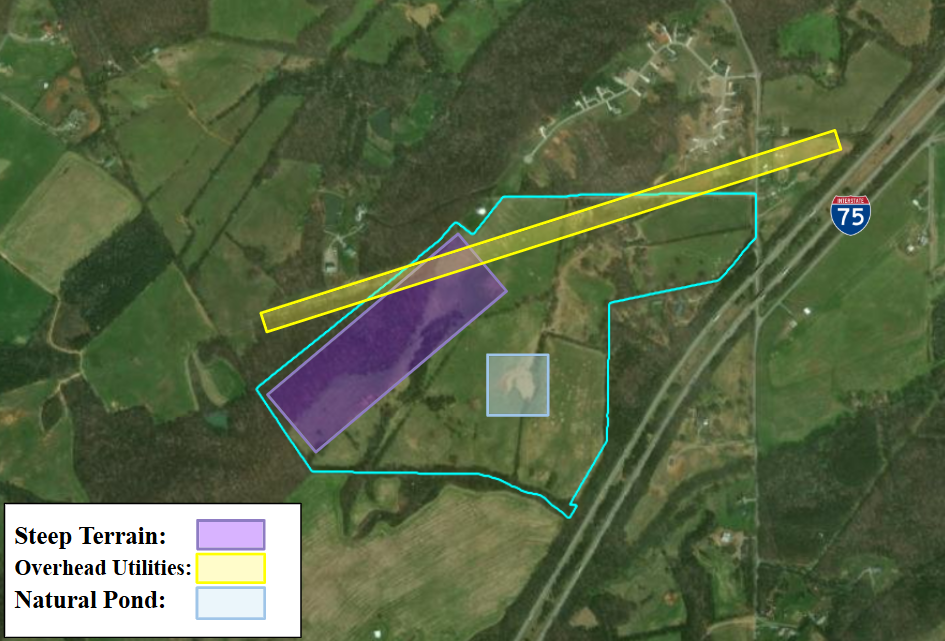
Summary: Blue Ridge Realty wants an evaluation of a 175-acre property in Loudon County, Tennessee, to be developed into an efficient and marketable light-industrial site. The client wishes to determine the suitability of the site for a single large facility of approximately one million square feet or multiple smaller buildings, and to further develop a site design of the layout selected. The client also requires an understanding of how existing topography, utilities, roadway access, and stormwater conditions influence feasible building footprints and long-term site functionality. The Blue Ridge Loudon design team was contracted to analyze the site’s physical conditions, explore layout alternatives, and develop preliminary civil design components that support informed decision-making for future development.
Student Team: Matthew Chiozza, Daniel Garcia, Lucas Kuenstle, Andrew Meinhart, and Jackson Roberts
Project Partners: Barge Design Solution, City of Alcoa
Summary: The City of Alcoa seeks a comprehensive improvement to the Chandler Road corridor to address long-standing infrastructure and performance issues. The client seeks a drainage system capable of managing the heavy and frequent water flow that has accelerated roadway deterioration. The client also requires a redesigned roadway layout that supports proper drainage while improving safety and functionality for all users. To accomplish these goals, the City of Alcoa has hired the Lane Rangers team to collaborate with Barge Design Solutions to deliver a sustainable redesign for Chandler Road.

Student Team: Ashleigh Jacobs, Kelly Vu, Maria Agbunag, and Alexander Nazerias
Project Partners: CEC, Inc.
Summary: Civil & Environmental Consultants, Inc. has reached out to Hickory Engineering on behalf of their clients to request creative guidance on the restoration of the preexisting Hickory Furniture Factory. CEC, Inc has said that their clients have requested removal of the current flooring and interior walls to transform the space into a multitenant facility with both commercial and industrial areas. The addition of an additional two loading dock spaces was also requested on the southeast side of the building as well as a drive-in vehicle access ramp on the northeast side of the building. Two retaining walls will be installed to accommodate the necessary changes needed to regrade the parking lot for tractor trailer access. Stormwater systems will also be updated to meet the jurisdictional requirements. Hickory Engineering has been contracted to perform engineering services for building and site renovations at the proposed site.

Student Team: Connor Muncy, Robert Cortino, Abdulrahman Alsaab, Dylan Hughes, and Nadine Al Ghailani
Project Partners: Jenga Tanzania, MBI, HDR
Summary: Jenga Tanzania’s main objective is to provide a safe, dependable bridge which will support local pedestrian travel and agricultural needs. Jenga Tanzania requested the bridge spans the Rutukira River, allowing for new growth opportunities for pedestrians and agriculture alike. Jenga Tanzania seeks a structure which is low maintenance and can be constructed locally with available resources. Jenga Tanzania also requests a design allowing for long-term durability, appropriate rainfall event planning, and takes local geotechnical and environmental factors into account. The Volunteer Bridge Initiative, in collaboration with HDR and MBI, was contracted to prepare the bridge design and associated supporting infrastructure.

Student Team: Bjorn Kammann, Trey Davis, Caleb Shumate, and Layne Kaufman
Project Partners: Jenga Tanzania, Buzzy Rocket, Cannon Group, TN
Summary: The Jenga Tanzania Agriculture project involved development of infrastructure systems needed to support agricultural production and long-term growth across the 50,000-acre Lutukira Farm property. The farm required a sanitary water system that supplied potable water for residential and commercial activity across dispersed building clusters. A wastewater system was also needed to collect and manage domestic flows in a manner that protected environmental quality across the developed areas of the property. An irrigation system was needed to provide reliable water delivery for crop production across the varied land uses present on the site. The Jenga Water team was tasked with preparing a complete, coordinated set of engineering documents for these systems.


Student Team: Gabriel Vaccaro, Max Bell, Blake Livingston, Harris Neu, and Trapp Flippo
Project Partners: City of Oak Ridge Recreation & Parks, DIA
Summary: The City of Oak Ridge obtained two parcels adjacent to Haw Ridge Park and are aiming to improve the existing conditions of the park. The client seeks the following: Addition of a parking lot, improved road conditions, improved pedestrian safety at greenway crossing, intersection improvements, water line upgrade, and the implementation of a sewer line. A bathroom location has been requested by the client but will be designed for future project. Oak Ridge Associates was hired to design a comprehensive plan set to meet the needs of the City of Oak Ridge.
Student Team: Gabriel Clarke, Reese Headrick, Kevin Blanchard, and Wilson Meyer
Project Partners: Jacobs Engineering, First Utility District
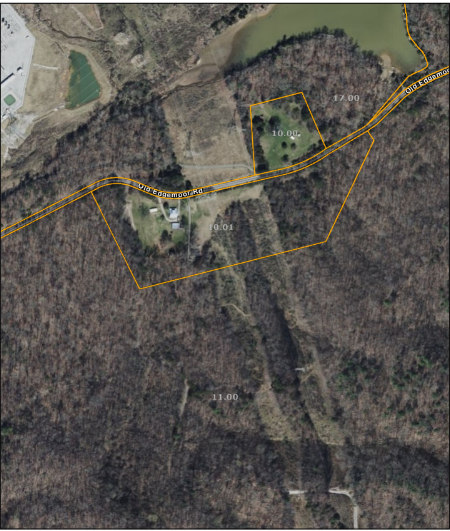
Summary: First Utility District has observed that the old Sinking Creek Pump Station, located along Lake Ridge Road in Concord, TN, is dilapidated through aging and needs to be replaced. The client seeks to build a modernized, upgraded 5500 GPM pump station on the existing site. The client also seeks to improve the SCPS site conditions to mitigate the impacts a 100-year flood plain poses. To achieve these goals, First Utility District hired our project team to design the upgraded pump station and to prepare the requisite engineering documents.

Student Team: Saathvik Gorti, Brian Keith, Trey Peaden, Kate Ermer, Maddon Williams, and Ben Looney
Project Partners: Solea Water, Barge Design Solutions
Summary: The Icandí water distribution system redesign project is in the Comarca Madugandí of the Republic of Panamá. The project aims to update current infrastructure at the intake and rebuild the current water distribution system at the community. The upgrades include resizing the trunkline and designing a suspension bridge to transport the water to the community. Solea Water has contracted the Blue Earth Engineering Company to design a layout for a new hydraulic system and supply supporting documents.

Student Team: Henry Brooks, Sophia Hodges,Kenny Ko, Kaleb Livingston, and Alexandra Organ
Project Partners: TDOT
Summary: The Tennessee Department of Transportation (TDOT) requests the design of a new precast concrete beam bridge for Cherokee Trail over Alcoa Highway. TDOT requests the development of structural plans based on TDOT and AASHTO requirements. The project requires development of the bridge preliminary layout based on the proposed roadway layout. The bridge deck will support 7 lanes of traffic in addition to shoulders and sidewalks. Geotechnical analysis of the area will inform substructure design for abutments and piers. As the existing roadways will remain open during construction, a comprehensive management plan is required for the project. Rocky Top Bridge Co. was contracted to develop a new bridge design to support the infrastructure changes in the area.

Student Team: Shane Galloway, Garrett Beaver, John Sepe, Luke Gross, and Blake DeGenova
Project Partners: TDOT
Summary: The project encompasses State Route 71, The Tennessee portion of this state route accommodates both residential and commercial traffic, providing a crucial connection in the state. The goal of this project is to design a State Industrial Access Road between State Route 71 and Sawmill Road, an adjacent corridor. This is to be done in accordance with TDOT standards and provisions. TDOT hired the SR-71 Blackbirds to design a roadway with 12-foot lanes and 4-foot shoulders to accommodate heavy commercialized vehicles alongside standard vehicles.

Student Team: Jack Ruzzo, Noah Simmons, Grant Hughes, and Bryant Ni
Project Partners: University of Tennessee, Knoxville Facilities Services, Stanley D. Lindsey and Associates
Summary: The University of Tennessee Pedestrian Bridge project seeks to establish a safe and efficient crossing option to manage post event pedestrian traffic leaving Thompson Boling Arena. The client seeks a pedestrian bridge that spans Lake Loudon Boulevard and connected to the east face of Neyland Sports Complex to alleviate congestion at the Lake Loudon Boulevard and Phillip Fulmer Way intersection. The location of the bridge origin will be positioned to limit the loss of existing parking spaces. To address these needs, JBNG Consulting was hired to perform civil engineering design services, including bridge design, site evaluation, pedestrian traffic analysis, and cost estimation in response to issues identified with pedestrian traffic surrounding Lake Loudon Boulevard.

Student Team: Amelia Thomson, Chris Camp, Georgia Ahrens, John Helphinstine, and Levi Hansen
Project Partners: The Villages at Glencliff, Crunk Engineering, EMC Structural Engineers, Tennessee Concrete Association
Summary: The Village at Glencliff seeks a resilient erosion-mitigation strategy for their medical respite community in Nashville, Tennessee. The client requests a compressive assessment of erosion and flooding affecting the existing campus and residential units on site. The client also requests the demolition and replacement of distressed pavement along the main driveway and parking areas. The Village at Glencliff requires design recommendations improving stormwater management, structural stability, and site aesthetics while aligning with future development and expansion plans. The Impactful Design team was engaged to analyze existing conditions and develop feasible alternatives that address these needs.

Student Team: Olivia Dunlap, Syll Everett, Jesse Foster, Ranya Moreland, and Ty Young
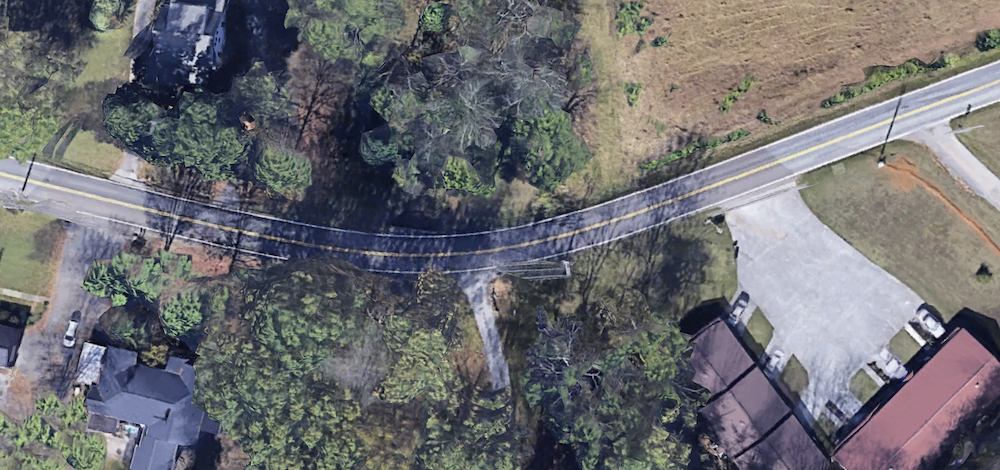
Project Partners: City of Maryville, EnSafe
Summary: The City of Maryville has identified a curve along Wilkinson Pike as unsafe due to inadequate sight distance, problematic geometry, and increased risk during inclement weather. Because these issues have contributed to driver run-offs and near miss incidents, the client seeks roadway improvements to enhance safety for neighborhood traffic. The City also requires any upgrades to account for the surrounding environment, as the existing stream conditions and wildlife within Duncan Branch Creek are sensitive to construction impacts. Additionally, because the existing culvert at Duncan Branch Creek is too narrow to accommodate the corrected roadway geometry, the client requires future drainage design efforts to address this structural constraint. To address these needs, the City of Maryville has hired Rocky Road Consulting to advance the preliminary engineering efforts for this project.